In The News


28 May 2026
RegVelo AI Predicts Cell Fate and Key Genes
From The Chosun Daily, research from the Sauka-Spengler Lab – RegVelo aids regenerative medicine, cancer research by identifying gene drivers.
Read Article
News
Organized by Stowers Institute Investigators Matt Gibson, Ph.D., Tatjana Sauka-Spengler, Ph.D., and Robb Krumlauf, Ph.D., the conference facilitated a collaborative environment aimed at creative scientific exchange. More than 100 participants attended, including 20 distinguished speakers and trainees.
The Stowers Institute for Medical Research recently hosted its biannual Stowers Research Conferences (SRC) from October 23 to 25, 2024, bringing together an international group of leading scientists, researchers, and trainees. This meeting's theme, "Developmental Cell Biology," provided a platform for both lab leaders and early-career scientists to delve into cutting-edge developments, foster new collaborations, and inspire advancements within the field.
Organized by Stowers Institute Investigators Matt Gibson, Ph.D., Tatjana Sauka-Spengler, Ph.D., and Robb Krumlauf, Ph.D., the conference facilitated a collaborative environment aimed at creative scientific exchange. More than 100 participants attended, including 20 distinguished speakers and trainees.

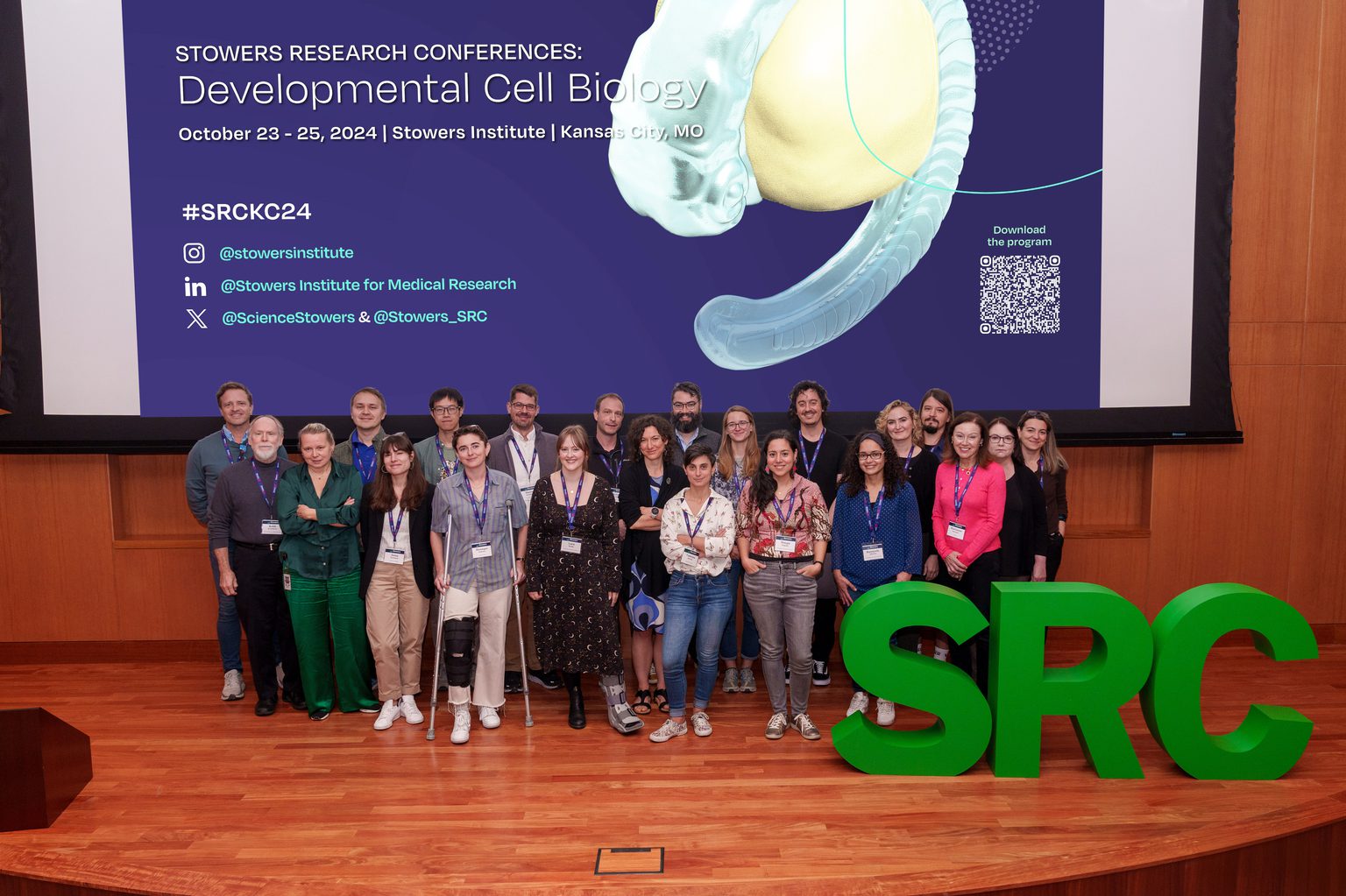
Lab leaders, trainees, and conference organizers
One of the conference’s standout features continued to be the distinctive tandem presentation format, where Principal Investigators and their trainees present their research together. Berna Sozen, Ph.D., from Yale University, noted that it provided invaluable exposure for early-career researchers and offered a refreshing approach to scientific communication. "Science communication is a big part of our job," Sozen said. “It led to lots of great discussions on evolutionary biology. There could be some opportunities now to expand my collaborations, which is something really great."
Duygu Özpolat, Ph.D., from Washington University in St. Louis, also highlighted the conference's intimate size as a significant benefit for deep discussions and networking. "I think the diversity of organisms and research topics has been great, and the smaller size allows us to interact continuously," she shared.

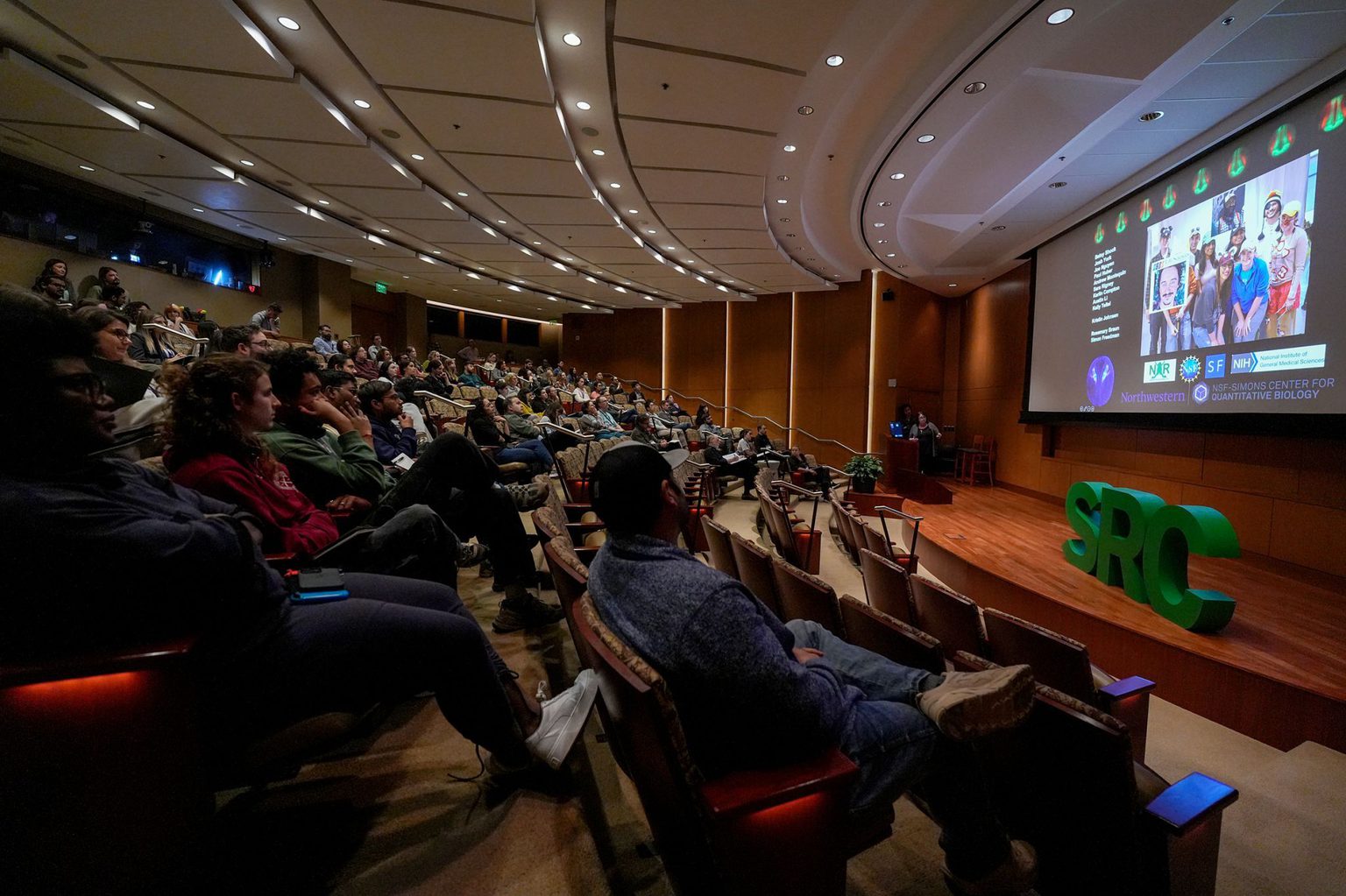
First-time tandem presenter Joshua York, Ph.D., from Northwestern University said, “This format was both challenging and inspiring, as it required a collaborative approach that reinforced the team-driven nature of scientific research.”
"The tandem talks show that science is a team effort," added Monique Pedroza, a Yale University trainee. “I really appreciated the conference’s focus on mentorship and collaboration.”
"For me, from a European perspective, Stowers feels like a Max Planck Institute," said Jan Štundl, Ph.D., from Caltech. "It’s a beautiful place that motivates you to think out of the box."
Stowers Research Conferences will present its next event in Spring 2025 in conjunction with the OddPols conference. Learn more here.
In The News
28 May 2026
From The Chosun Daily, research from the Sauka-Spengler Lab – RegVelo aids regenerative medicine, cancer research by identifying gene drivers.
Read Article
In The News


12 May 2026
From Brighter Side of News, research from the Sauka-Spengler Lab, RegVelo combines RNA velocity and gene networks to predict how cells choose identities and react to genetic disruption.
Read Article
Press Release

11 May 2026
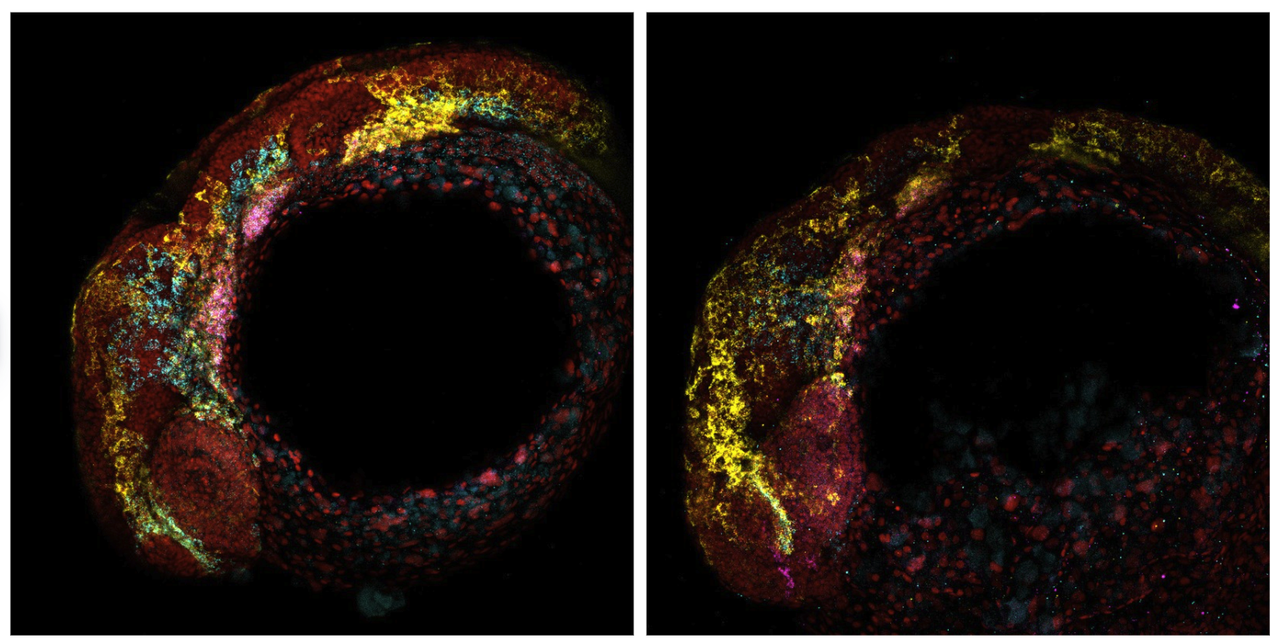
RegVelo, a new AI technology developed by Stowers Institute and Helmholtz Munich scientists, allows researchers to predict not only how cells acquire their identities, but what path they take and what drives them there — with implications for developmental disorders, tumor growth, and regenerative medicine.
Read Article
Press Release
11 May 2026
RegVelo, a new AI technology developed by Stowers Institute and Helmholtz Munich scientists, allows researchers to predict not only how cells acquire their identities, but what path they take and what drives them there — with implications for developmental disorders, tumor growth, and regenerative medicine.
Read Article