
Resources for Educators
Our Teaching Approach
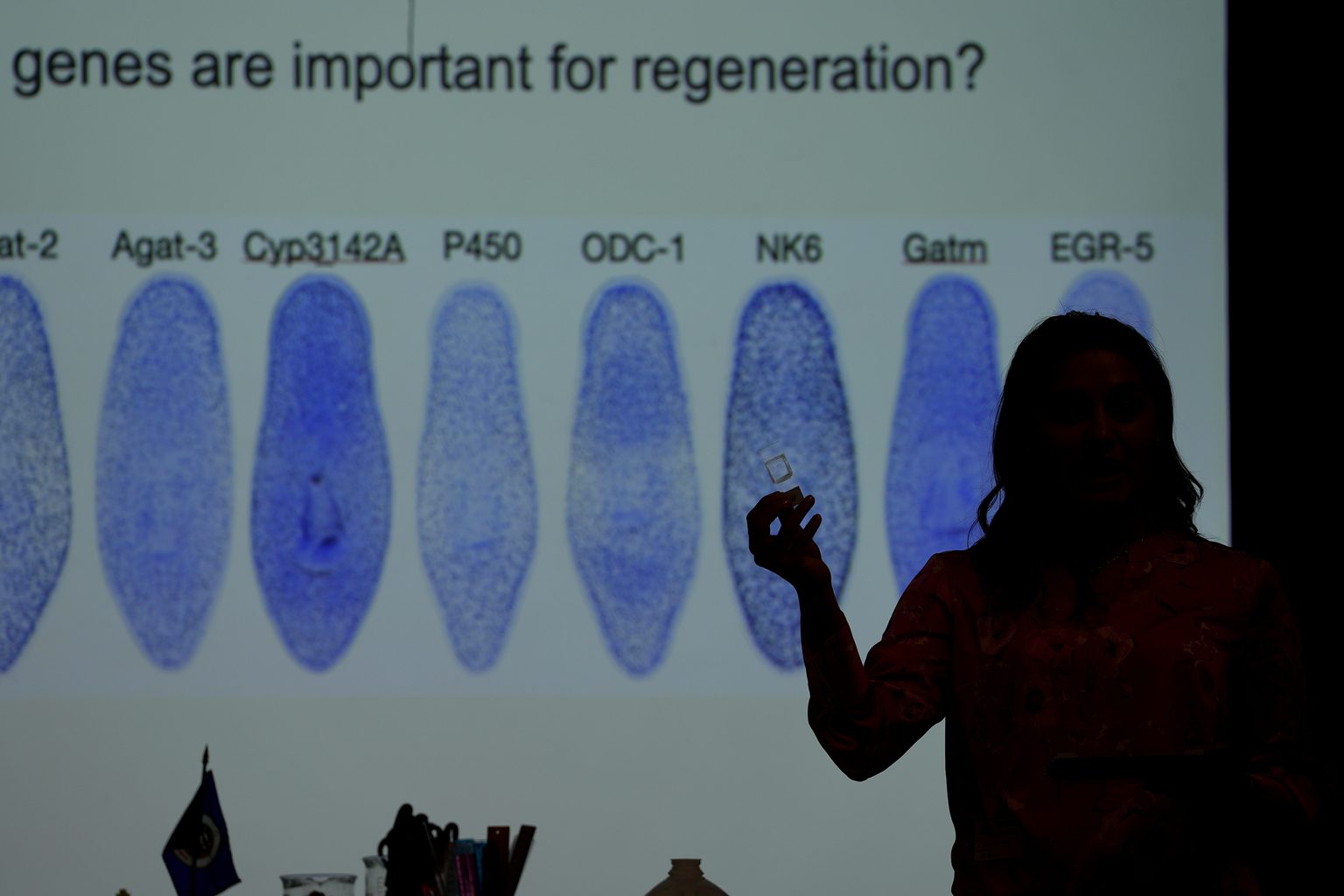
This module is organized in a lecture lesson, laboratory lesson, and student independent data collections. The lecture lesson is built to allow students to observe planarians, learn the foundational concepts of planarian regeneration and stem cell proliferation, as well as spark curiosity. This lecture lesson prompts students to begin asking questions about stem cell regenerations and how questions can be formulated to study such concepts. The laboratory lesson guides students through the scientific method of formulating a testable question and hypothesis and designing a controlled experiment. Next, students will collect both quantitative and qualitative data during the planarian regenerative process of 14-days, process data analysis through images and graphs, and communicate those results through poster presentations.

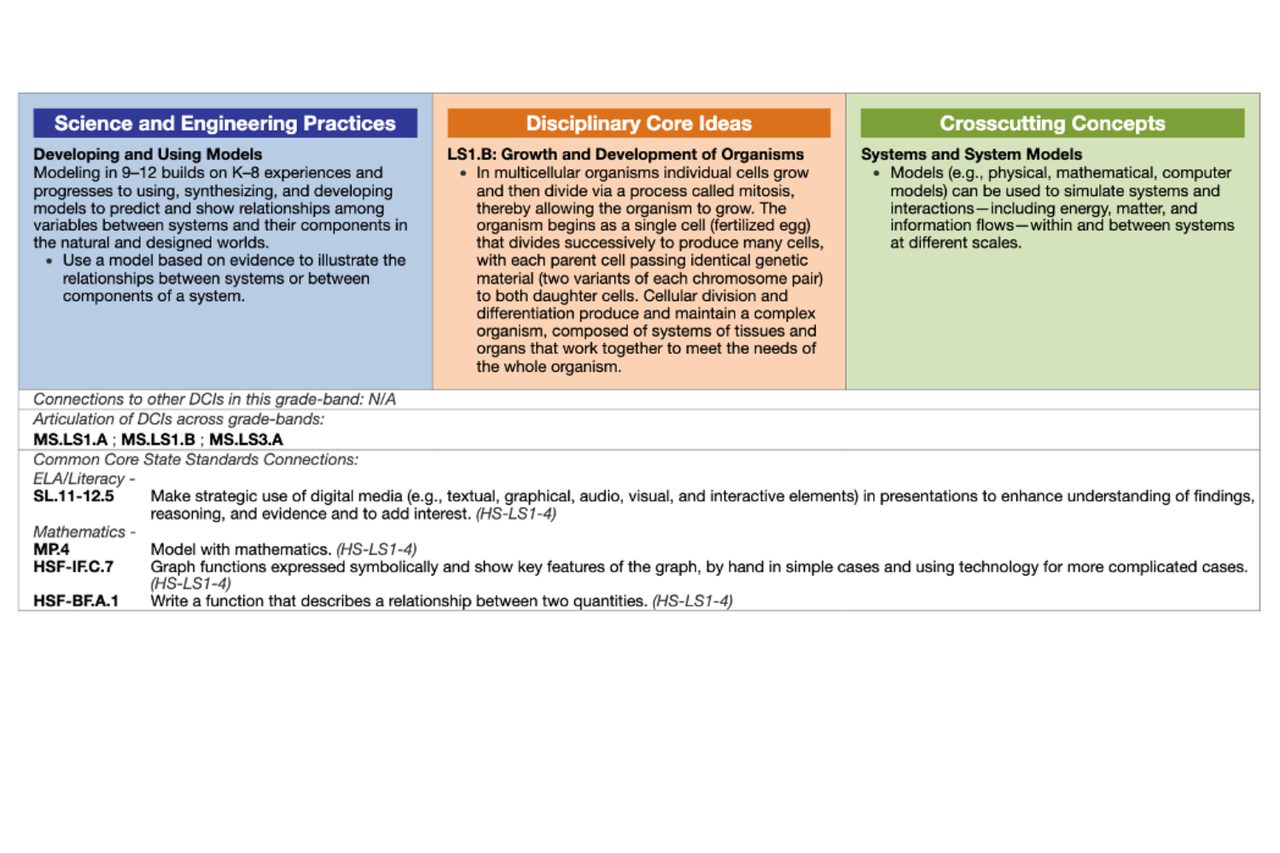
Next Generation Science Standards
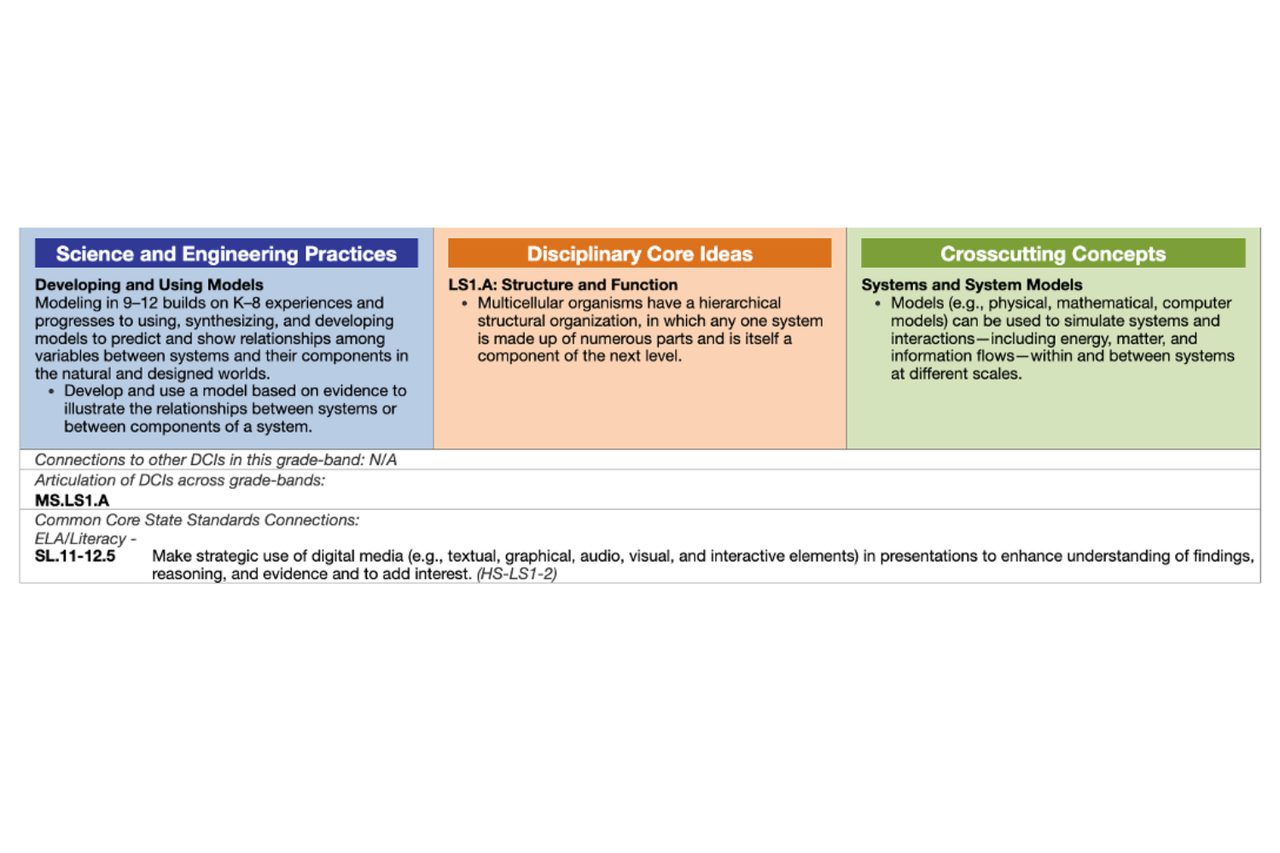
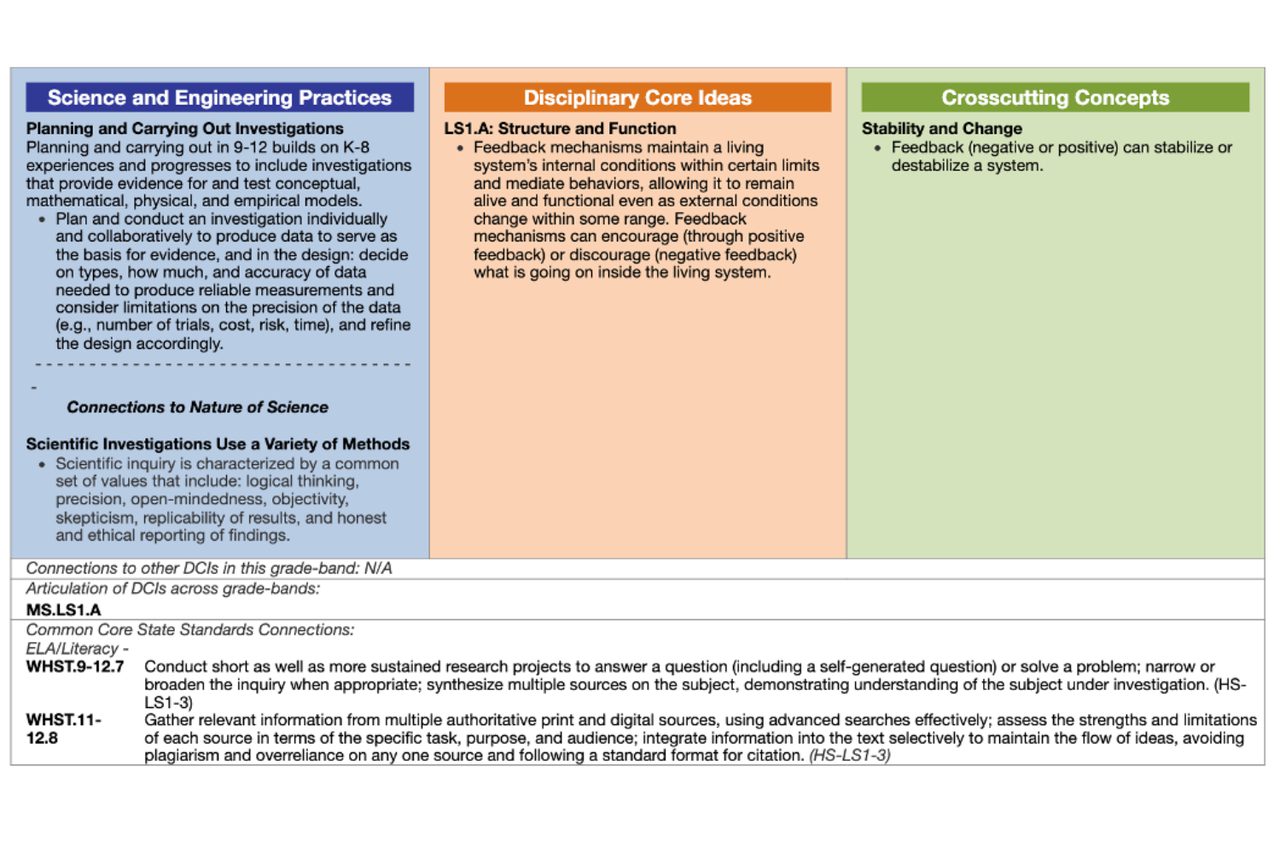
This module is aligned with the Performance Expectation (PE) HS-LS1-2, HS-LS1-3, and HS-LS1-4 from the NRC Framework and Next Generation Science Standards. The three dimensions of learning which make up these PEs are indicated in the color-coded tables. Learn more about Next Generation Science Standards.
HS-LS1-2.


Develop and use a model to illustrate the hierarchical organization of interacting systems that provide specific functions within multicellular organisms. [Clarification Statement: Emphasis is on functions at the organism system level such as nutrient uptake, water delivery, and organism movement in response to neural stimuli. An example of an interacting system could be an artery depending on the proper function of elastic tissue and smooth muscle to regulate and deliver the proper amount of blood within the circulatory system.] [Assessment Boundary: Assessment does not include interactions and functions at the molecular or chemical reaction level.] Learn more.

HS-LS1-3.
Plan and conduct an investigation to provide evidence that feedback mechanisms maintain homeostasis. [Clarification Statement: Examples of investigations could include heart rate response to exercise, stomate response to moisture and temperature, and root development in response to water levels.] [Assessment Boundary: Assessment does not include the cellular processes involved in the feedback mechanism.] Learn more.

HS-LS1-4.
Use a model to illustrate the role of cellular division (mitosis) and differentiation in producing and maintaining complex organisms. [Assessment Boundary: Assessment does not include specific gene control mechanisms or rote memorization of the steps of mitosis.] Learn more.

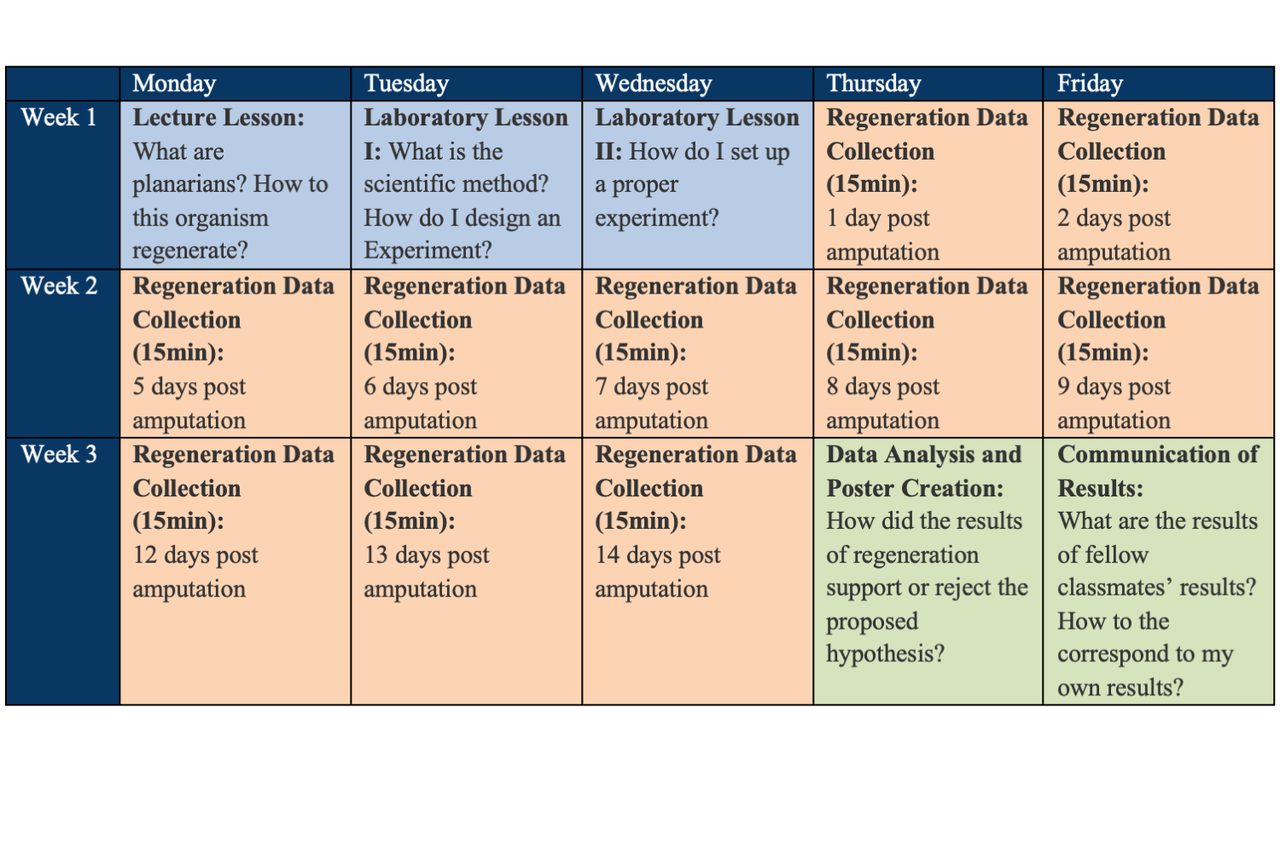
Module Calendar
This module calendar provides an example of how the lecture lesson, laboratory lesson, and data collection of regeneration that formulate this module might progress over a three-week period. The calendar assumes one 50-minute class period per day and five day per week of instruction.

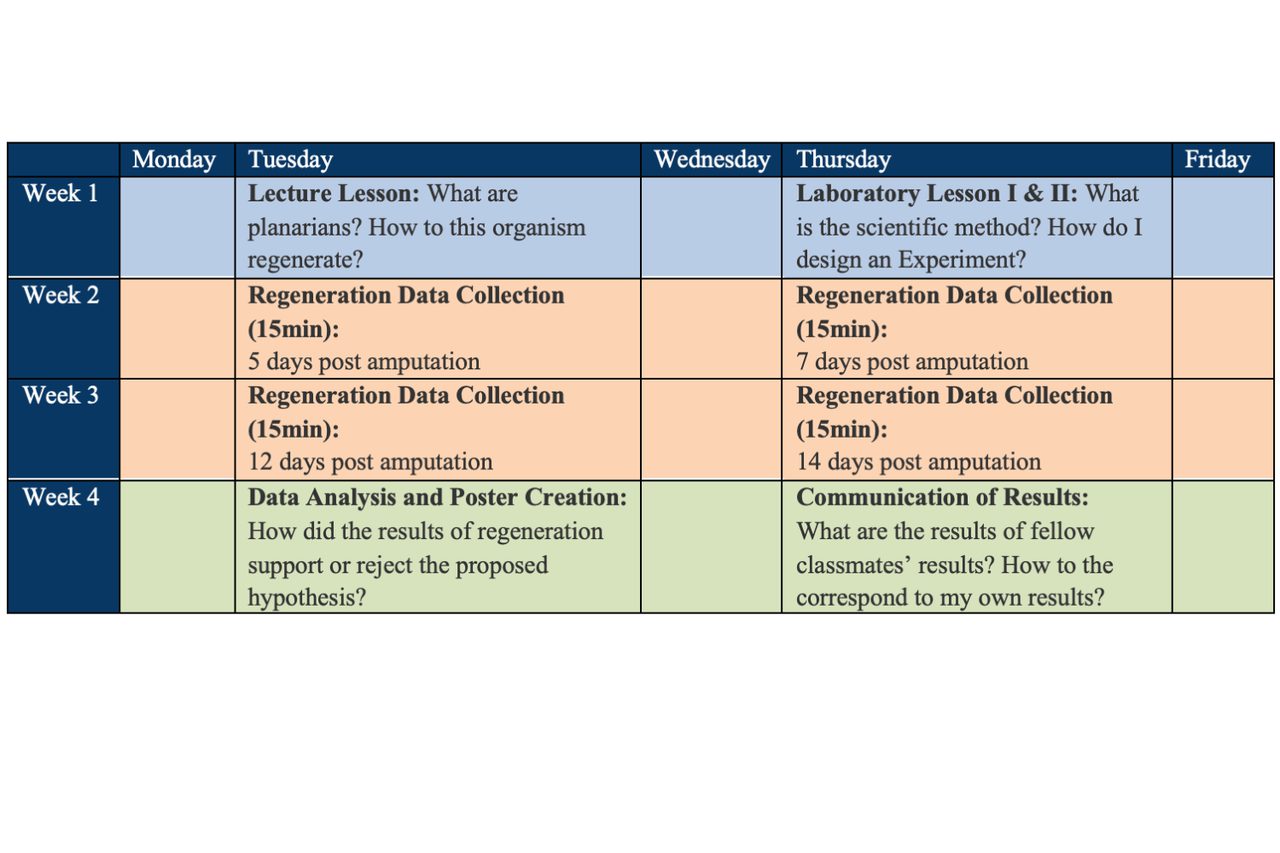
Alternative Module Calendar
This alternative module calendar provides an example of how the lecture lesson, laboratory lesson, and data collection of regeneration that formulate this module might progress over a four-week period. The calendar assumes one 90-minute class period per class.

Special Considerations and Resources

Teacher and Student Surveys
To help us improve this program, we kindly ask all participants to complete a short survey before beginning the module.
After completing the module, please take a few moments to share your experience. Your responses help us improve future versions of this program.

Classroom Materials & Lab Equipment
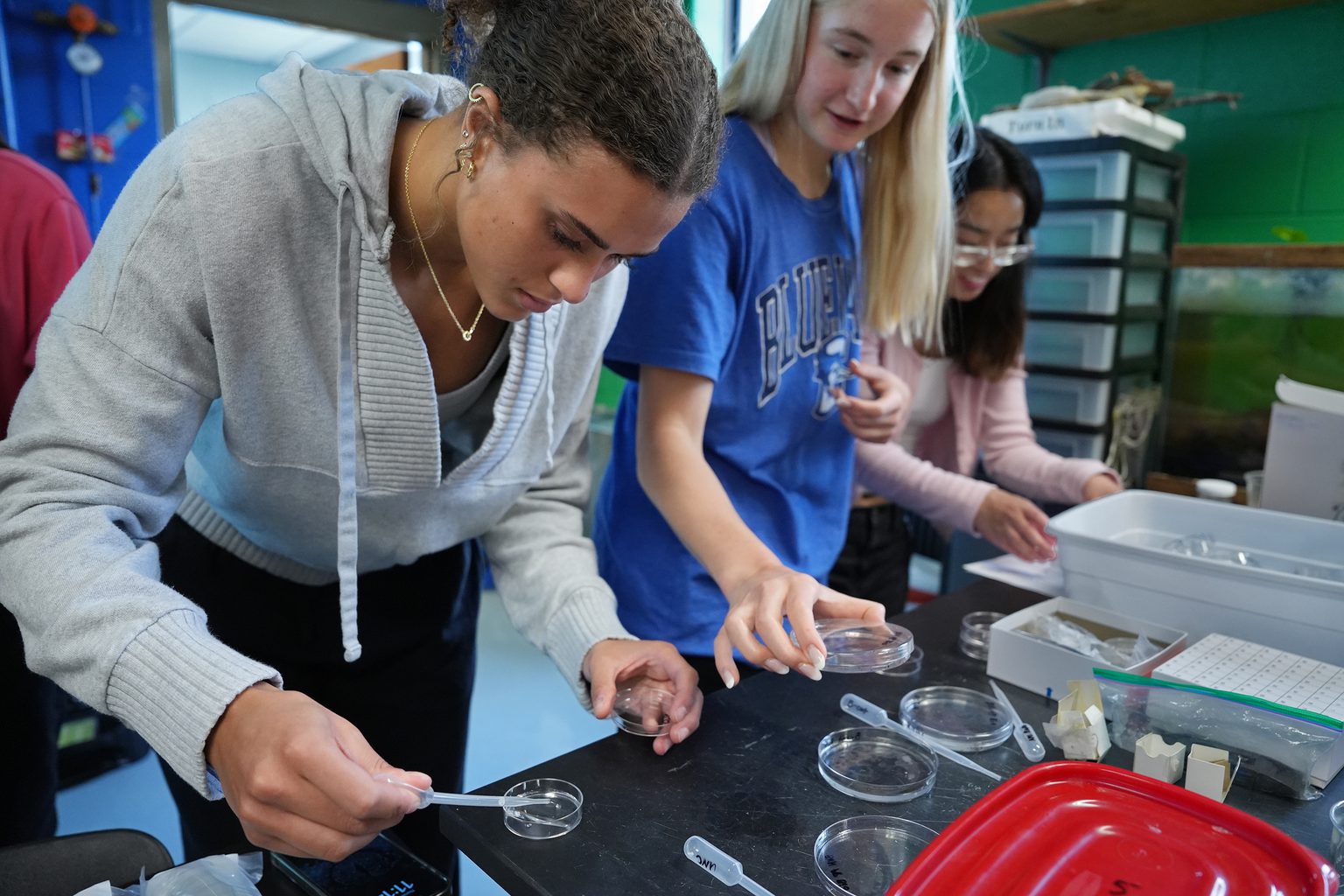
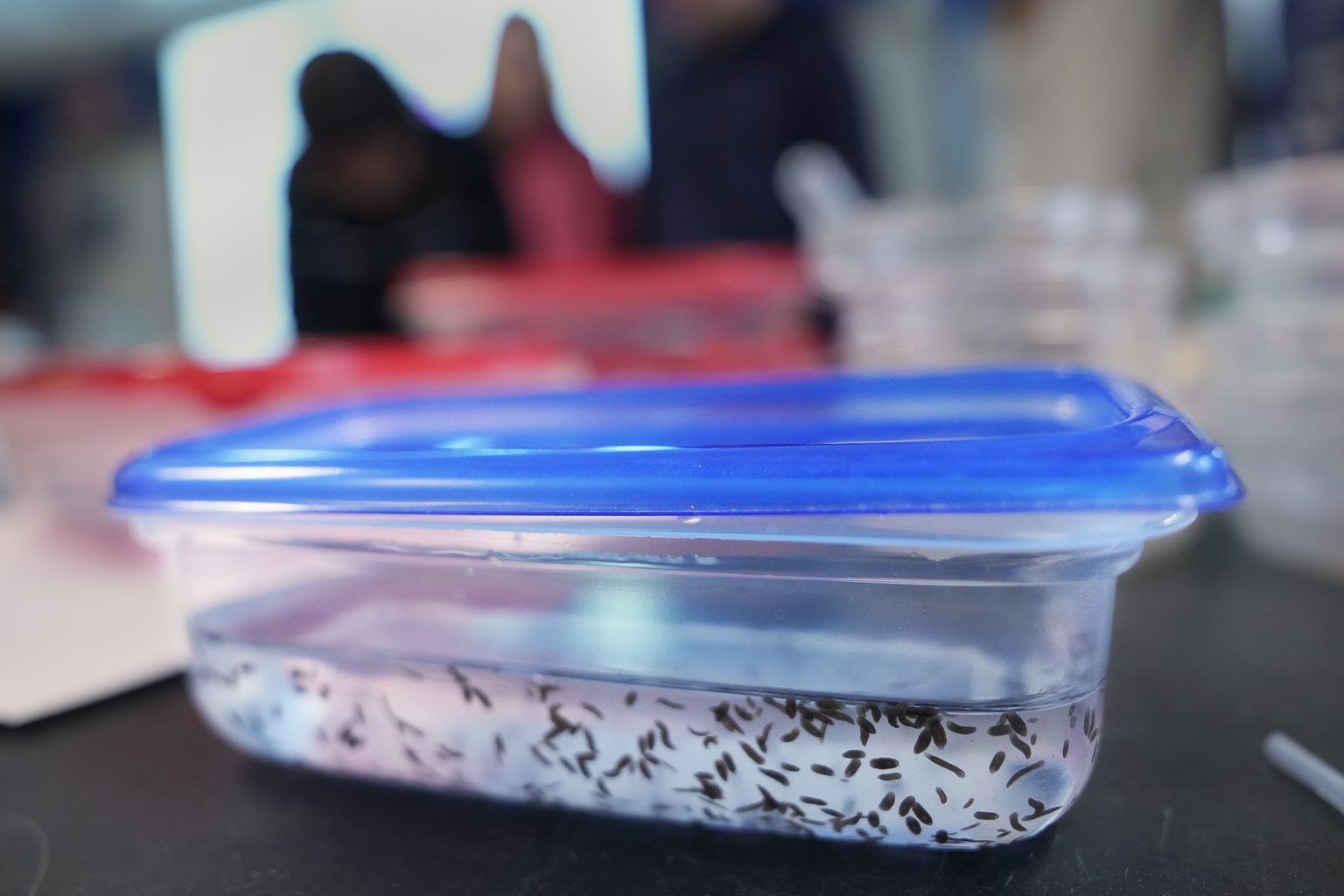
In the laboratory lesson, it is optional to use a microscope to observe the planarian activity at high magnification. A list of important material is also listed in the protocol handout. The list includes planarians, petri dishes, spring water, cover slips, transfer pipettes, permanent marker, and notebook for data collection.
Purchasing Planaria:
Carolina Biological Supplies
Ward’s Science
Other resources:
Stowers Institute for Medical Research
Sanchez Alvarado Laboratory
Planarian Educational Resource for upper-level courses
Teaching Materials
The lessons contain links to the associated PowerPoint slide decks, student handouts, and other materials. All downloadable teaching and student materials are provided below for ease of use.
Student Lecture Worksheet: Questions and activities to accompany the lecture.
Student Experiment Worksheet: Guided instructions for conducting the regeneration experiment.
Scientific Method Worksheet: Helps students structure their hypotheses, observations, and conclusions.
Vocabulary List: Key terms for students to learn and reference.