Press Release
26 January 2026
New research reveals how the brain turns experience into memory — with help from a tiny protein
Stowers scientists expand their pivotal discovery on the form and function of amyloids
Read Article
News
An enigma to human health: How amyloids shape disease and memory
Amyloids are typically associated with devastating neurodegenerative diseases such as Alzheimer’s. Despite their notorious reputation, these proteins clusters can, in fact, help our brains store long-term memories.
“You’ve probably heard that amyloid proteins are dangerous in the brain,” said Olivia Kim, a Stowers Graduate School student in the lab of Investigator and Scientific Director Kausik Si, Ph.D. “But what if I told you that amyloids could actually serve a positive purpose?"
Amyloids have several distinct features. They form when proteins adopt an unusual shape that then serves as a template, attracting additional proteins to shapeshift and stack together into highly stable structures. When viewed under a microscope, amyloids appear as tiny fibers with a characteristic molecular signature called a “cross-beta” formation.
"Think of amyloids as proteins with a very specific shape,” said Kim. “Once that shape forms, it encourages other proteins to copy it — so the amyloid sticks around much longer than most protein structures.”

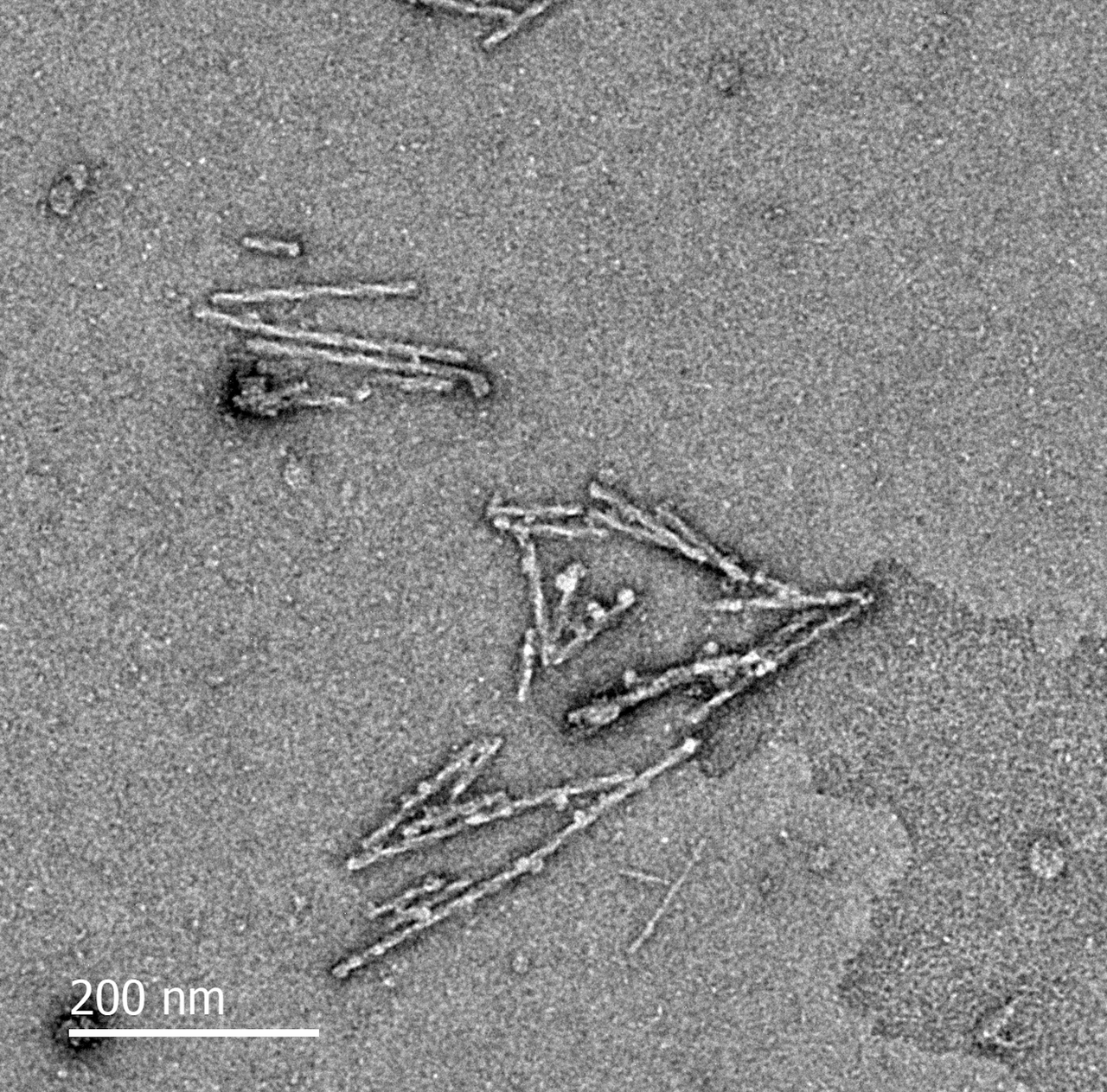
Electron microscopy image of Orb2 amyloid fibers
In neurodegenerative diseases like Alzheimer’s and Parkinson’s, proteins that normally help our cells can transform and turn into harmful amyloids. Disease-linked amyloids tend to slowly build up in the brain, disrupting normal neuron function and causing cognitive decline.
But not all amyloids are harmful. Some play beneficial roles in cells, such as providing structural support or acting as storage devices for memory. In fact, the Si lab is learning that their remarkable stability may be essential for the amyloid function of building long-term memory storage.
“Amyloids may be an enigma to human health,” said Kim, “But here at the Stowers Institute, we hope to understand how our cells can harness their power for good — unlocking new approaches to both preserve memory and combat neurodegeneration.”
Check out more #BioBasics videos and stories here.
Press Release
26 January 2026
Stowers scientists expand their pivotal discovery on the form and function of amyloids
Read Article
News

20 March 2026
Understanding the brain means confronting some of biology’s toughest questions. Stowers scientists are exploring how memories last, how neurodegenerative disease begins, and how the brain’s circuitry takes shape.
Read Article
News


19 March 2026
Postdoc Profile: Inspired by childhood curiosity, Mansoor Hussain, Ph.D., is now building a career around understanding how cells work at their most fundamental level.
Read Article