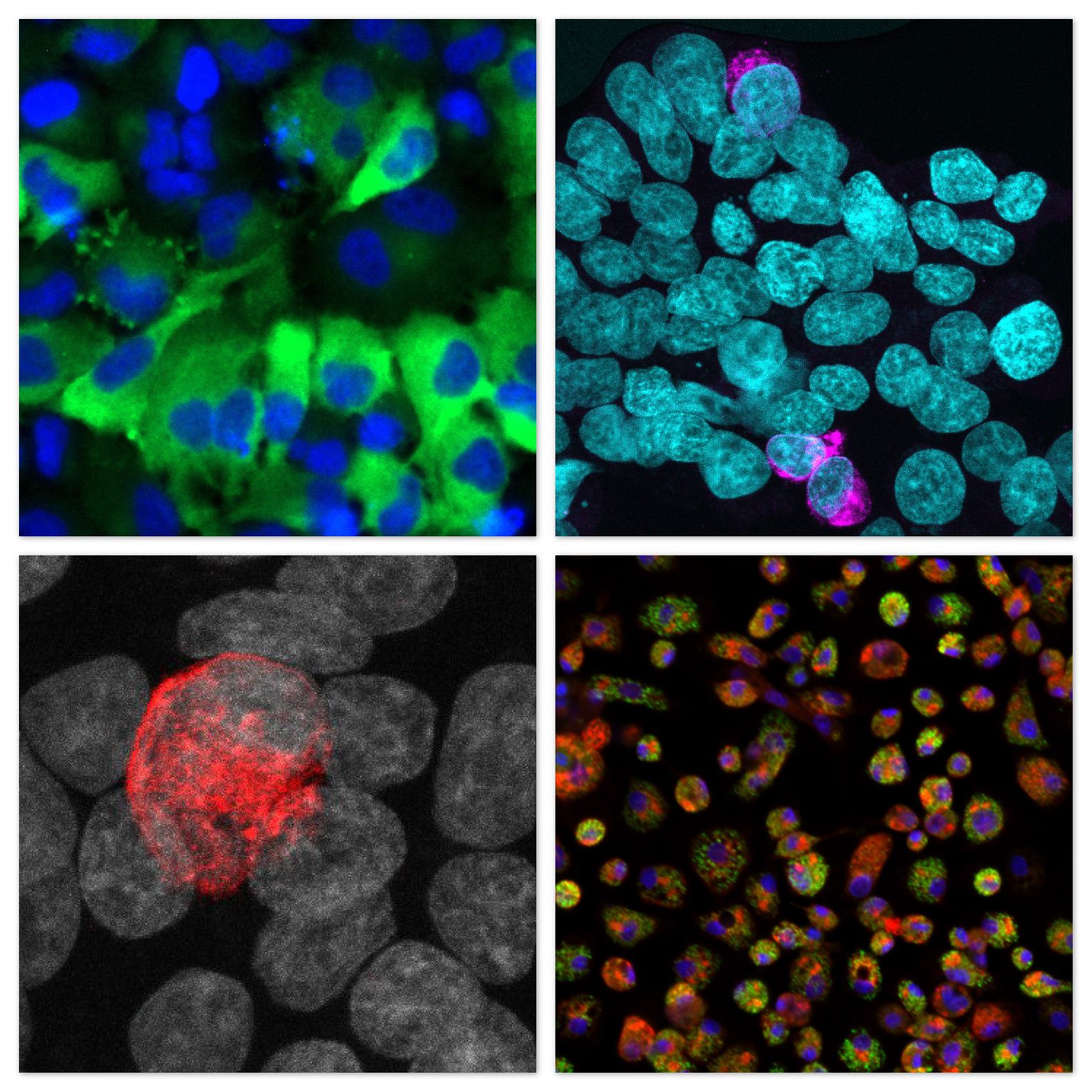
Dengue virus needs the proteins encoded in its single-stranded RNA genome to propagate, but the virus can’t produce them on its own. The virus must use the host cell’s protein production machinery, so the researchers hypothesized that dengue virus would use codons or “vocabulary” similar to that of mosquitos and humans.
“The genetic code is universal for all living organisms and contains 64 codons, the three-nucleotide ‘words’ of RNA, that specify the amino acids that make up proteins,” said Bazzini.
The nature of the genetic code allows for more than one codon to specify the same amino acid. Functioning like synonyms in language, codons that specify the same amino acid are called synonymous codons.
But just as each synonym is a distinct word, each synonymous codon has individual properties that can impact a cell’s efficiency for manufacturing proteins as well as the stability of RNA. In addition, a particular synonymous codon can be efficient and optimal in one species but inefficient and nonoptimal in another. This concept is called codon optimality. The Bazzini Lab studies the codon optimality code in humans and other vertebrates, and in this study, the researchers identified for the first time that the mosquito genome also follows its own optimality code.
The researchers found that dengue virus tends to use synonymous codons that are deemed less optimal in their mosquito and human hosts, contrary to their original prediction.
“We were surprised to find that dengue virus preferentially uses the host’s less efficient codons, possibly as a strategy to evade an antiviral response by the host,” said Castellano.
“Viruses accumulate mutations during infection of their hosts. We were surprised to find that mutations in the dengue virus genome toward these less efficient codons increased dengue virus fitness in both mosquito and human cells,” said Ryan McNamara, a Bioinformatics Analyst in the Bazzini Lab whose contribution was key to this work.
The team analyzed hundreds of other human-infecting viruses and found that many of them, including HIV and SARS-CoV-2, preferentially use less efficient codons relative to humans, suggesting they have evolved an “inefficient” genome as a strategy to use host cell resources in a way that benefits the virus. The conserved preference among viruses has implications to understand not only how viruses evolve but also how the host-pathogen relationship changes over time.
“Fundamentally, this work has altered how we think about the relationship between a virus and a host cell,” said Bazzini.
“In the future, we hope to better understand the mechanism by which viruses are benefitting from using these inefficient codons, and which molecules viruses may be manipulating to gain control,” said Castellano.
The Centers for Disease Control and Prevention reported that cases of dengue have doubled since just last year in the Americas, and warn of an increased risk of infection in the U.S.
“As mosquitos are spreading to broader, more global regions, we need to start thinking very seriously for how to combat dengue and other mosquito-borne viral infections,” said Bazzini.
Additional authors include Horacio Pallarés, Ph.D., from the Stowers Institute; Andrea Gamarnik, Ph.D., from Fundación Instituto Leloir-CONICET, Argentina; and Diego Alvarez, Ph.D., from Universidad Nacional de San Martín-CONICET, Argentina.
This work was funded by the National Institute of General Medical Sciences of the National Institutes of Health (NIH) (award: R01GM136849), the NIH Office of the Director (award: R21OD034161), the PEW Innovation Fund award, and institutional support from the Stowers Institute for Medical Research. The content is solely the responsibility of the authors and does not necessarily represent the official views of the NIH.
About the Stowers Institute for Medical Research
Founded in 1994 through the generosity of Jim Stowers, founder of American Century Investments, and his wife, Virginia, the Stowers Institute for Medical Research is a non-profit, biomedical research organization with a focus on foundational research. Its mission is to expand our understanding of the secrets of life and improve life’s quality through innovative approaches to the causes, treatment, and prevention of diseases.
The Institute consists of 21 independent research programs. Of the approximately 500 members, over 370 are scientific staff that include principal investigators, technology center directors, postdoctoral scientists, graduate students, and technical support staff. Learn more about the Institute at www.stowers.org and about its graduate program at www.stowers.org/gradschool.
Media Contact:
Joe Chiodo, Head of Media Relations
724.462.8529
press@stowers.org