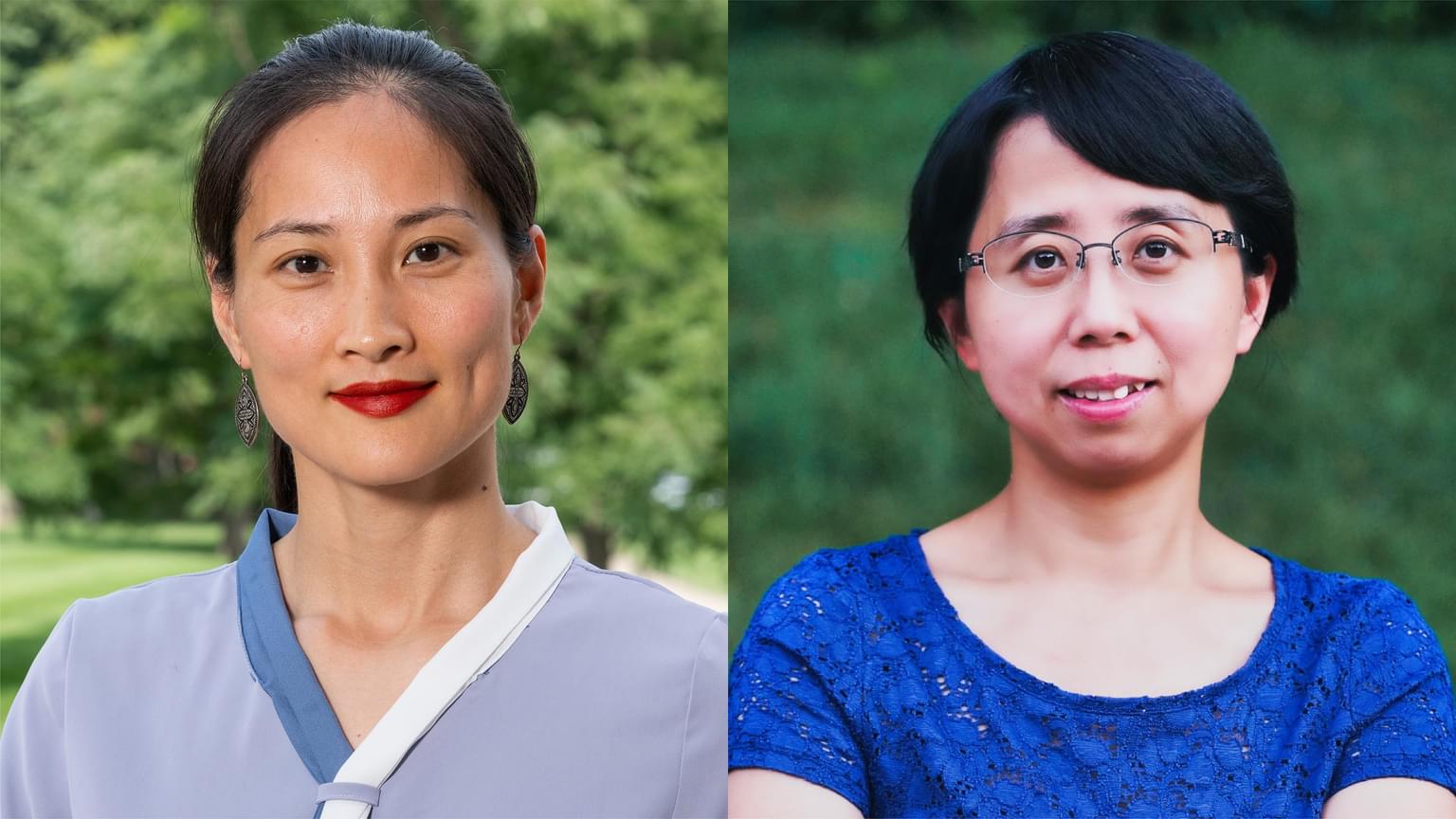
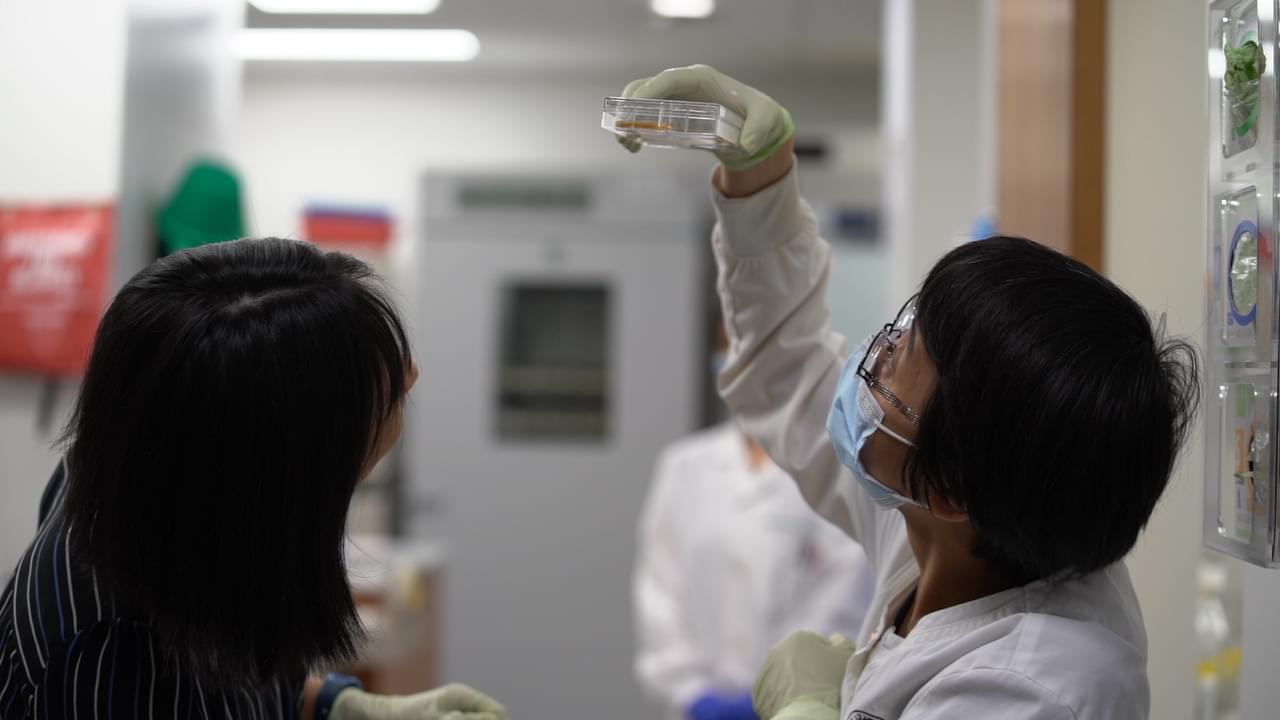
What makes organoids such a powerful tool in scientific research, and what are some specific areas of biology or disease that your team is currently studying using these models?
Yan: Compared to 2D culture, which involves growing cells on a flat surface such as a petri dish, organoids resemble human organs, allowing researchers to study how an organ may develop normally and what may go wrong in disease. Some of our current projects with Stowers investigators include working with the Li Lab on intestinal cancers using human intestinal organoids and working with the Bazzini Lab to find mechanisms for dengue virus infection using human liver organoids.
How does the technology you use in the Cells, Tissues, and Organoids Center differ from traditional lab models, and what are some of the key advantages of using organoids in research?
Chongbei: Traditionally, 2D cell culture systems have been widely used in labs due to their low cost, high reproducibility, and ease of access. 3D organoids, despite the early foundation work developed in the 1900s, really began revolutionizing in vitro cellular models over the past 15 years. Organoids offer significant advantages over 2D culture systems, such as greater physiological relevance, better disease modeling, and enhanced predictive modeling for drug discovery.
Can you share a recent example where your team’s work with cells, tissues, or organoids led to an exciting new insight or discovery? How does this research impact future medical or therapeutic developments?
Chongbei: A groundbreaking discovery from the Li Lab, published in November 2024, highlights the utilization of mouse intestinal organoids to identify a protein, Frizzled5, as a key regulator of intestinal stem cells that played a crucial role in the regeneration of the epithelium, or the cells lining the intestine. With an improved understanding of intestinal maintenance and regeneration, this new discovery opens the door to novel therapeutic approaches to treat gastrointestinal diseases, advance regenerative medicines, and develop targeted cancer therapies.
What are some of the challenges your team faces when working with complex biological models like organoids, and how are new technologies helping to overcome these challenges?
Yan: A major challenge in organoid culture is to ensure reproducibility and consistency within the complex 3D systems. Additionally, the lack of certain cell types, such as immune cells, within specific organoids can limit their functionality.
Chongbei: Enhancing organoid reproducibility, consistency and predictability is one challenge; however, we can now validate an organoid system using multiple types of sequencing techniques, such as spatial or conventional transcriptomics, which has accelerated significantly in the last decade. Furthermore, interdisciplinary collaborations integrating advanced technologies, including automation, organ-on-chip (cells on transparent plates that allow air and fluid to flow through, mimicking how organs work in the body), CRISPR gene editing (a gene-editing technology that can precisely modify DNA), and AI, have had a profound impact on verifying organoids as suitable representatives for in vivo organs.